



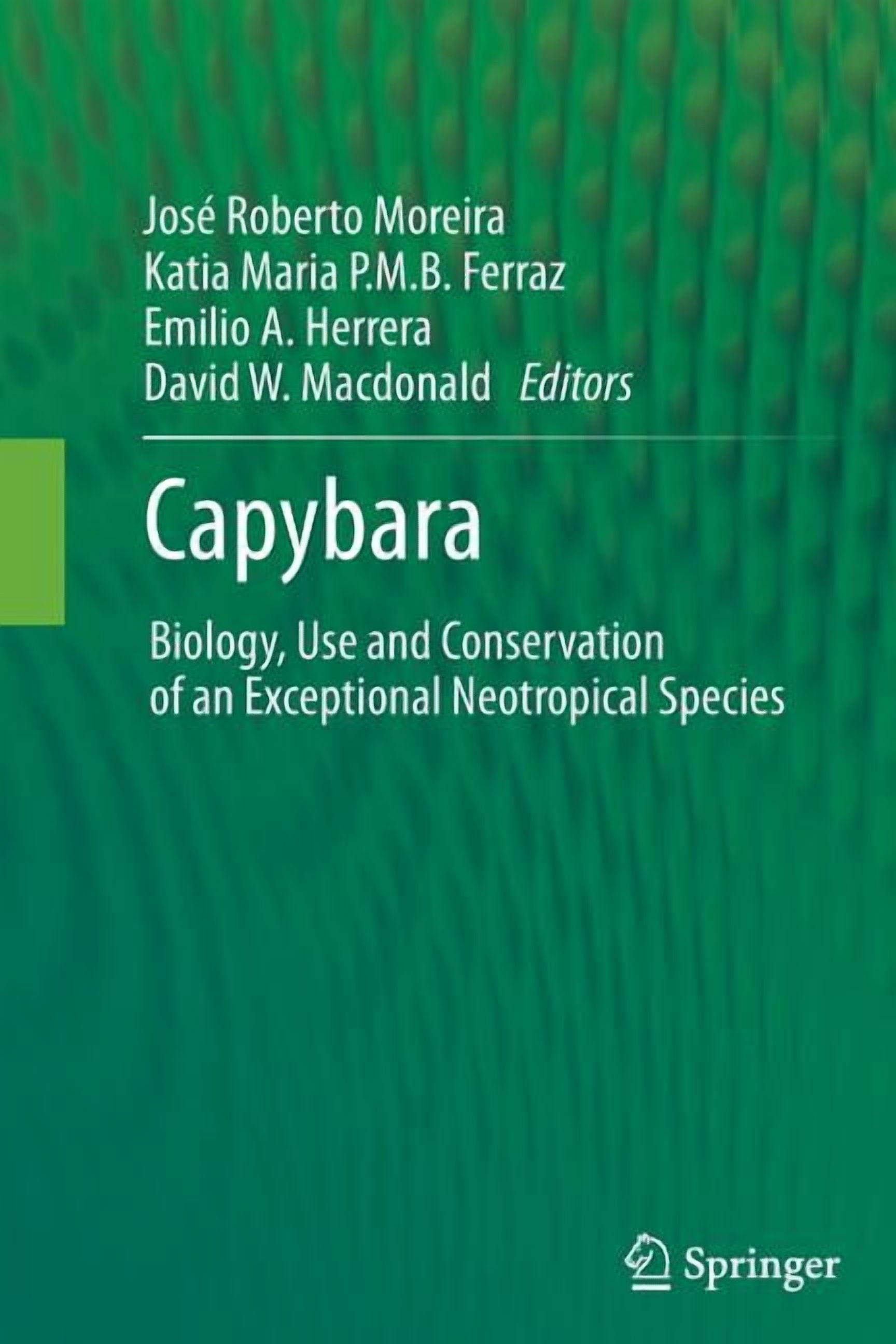
Capybara: Biology, Use and Conservation of an Exceptional Neotropical Species, (Paperback)

 4.0 (81 items)
 Limited Time Sale
US$120.98 cheaper than the new price!!
Free cash-on-delivery fees for purchases over $99
Product details
| Management number | 230941044 | Release Date | 2026/06/18 | List Price | US$80.65 | Model Number | 230941044 | ||
|---|---|---|---|---|---|---|---|---|---|
| Category | |||||||||
The capybara is the neotropical mammal with the highest potential for production and domestication. Amongst the favorable characteristics for domestication we can list its high prolificacy, rapid growth rate, a herbivorous diet, social behavior and relative tameness. The genus (with only two species) is found from the Panama Canal to the north of Argentina on the east of the Andes. Chile is the only country in South America where the capybara is not found. The species is eaten all over its range, especially by poor, rural and traditional communities engaged in subsistence hunting. On the other hand, in large urban settlements wildlife is consumed by city dwellers as a delicacy. The sustainable management of capybara in the wild has been adopted by some South American countries, while others have encouraged capybara rearing in captivity.
- Capybara: Biology, Use and Conservation of an Exceptional Neotropical Species, (Paperback)
- Author: Springer
- ISBN: 9781493900985
- Format: Paperback
- Publication Date: 2014-09-21
- Page Count: 422
| Book format | Paperback |
|---|---|
| Fiction/nonfiction | Non-Fiction |
| Genre | Travel & Nature |
| Publication date | September, 2014 |
| Pages | 422 |
| Subgenre | Environmental Conservation & Protection |
| Series title | No Series |
| Number in series | 0 |
| Edition | 2013 Edition |
| Publisher | Springer New York |
| Original languages | English |
| Language | English |
| Edu focus | Biology |
| Educational level | General |
| Is collectible | N |
| Editor | José Roberto Moreira; Katia Maria P M B Ferraz; Emilio A Herrera; David W MacDonald |
| Recording time | 0 min |
| Retail packaging | Single Piece |
| Assembled product dimensions (l x w x h) | 6.14 x 0.89 x 9.21 in |
| Assembled product weight | 1.35 lb |
| Bisac subject heading | Nature |

Customers who viewed this product also viewed
All Books



Correction of product information
If you notice any omissions or errors in the product information on this page, please use the correction request form below.
Correction Request Form